HomeDestinationGreecePeloponnese
Last updated: October 2026
The Peloponnese is Greece at its most dramatic and most authentic — a vast peninsula where Bronze Age citadels crown rocky hills, Byzantine ghost towns cling to cliffsides and turquoise Aegean water laps at beaches that remain refreshingly unhurried. Few regions anywhere in Europe can match the density of history packed into this corner of the Mediterranean, and yet the Peloponnese rewards visitors with something else entirely unexpected: quieter beaches, superb local cuisine and a pace of life that feels a world apart from the busier Greek islands.
For UK holidaymakers, the Peloponnese offers outstanding value and remarkable variety. The region is home to three UNESCO World Heritage Sites — ancient Olympia, Mycenae and Epidaurus — alongside the remarkable Byzantine town of Mystras, the cliff-top fortress of Monemvasia and the wild Mani Peninsula. Whether you are drawn by classical antiquity, medieval history or simply the prospect of clear Aegean water with half the crowds of Mykonos or Santorini, the Peloponnese delivers everything a Greek holiday promises and more.
The ancient sanctuary of Olympia, set in a green valley in the western Peloponnese, is one of the most moving archaeological sites in the world. This was the birthplace of the Olympic Games, held every four years without interruption from 776 BC to 393 AD — a tradition that lasted longer than the entire history of modern sport. Walking across the original stadium threshold where the ancient athletes competed still carries a palpable charge, even two and a half millennia later.
The site is spread across a shaded, pine-scented plain, making it far more pleasant to explore than many exposed ancient sites in high summer. The Temple of Zeus once housed one of the Seven Wonders of the Ancient World — the colossal gold and ivory statue of Zeus crafted by the sculptor Pheidias. The temple’s fallen columns lie exactly as an earthquake toppled them centuries ago, giving Olympia an authenticity that is genuinely affecting. The on-site archaeological museum is outstanding, housing the complete sculptural programme from the Temple of Zeus and the beautiful Hermes of Praxiteles, carved in the 4th century BC and one of the finest surviving examples of ancient Greek sculpture.
Mycenae is where Greek civilisation as we know it was born. This Bronze Age citadel, set on a commanding ridge in the Argolis region, was the palace city of Agamemnon, and the discoveries made here by Heinrich Schliemann in 1876 — including the gold death mask he proclaimed was the face of Agamemnon himself — rewrote our understanding of early European history. The Lion Gate, the 3,500-year-old monumental entrance to the citadel, remains a genuinely astonishing piece of ancient engineering and the oldest monumental sculpture in Europe.
Just 50 kilometres away lies Nafplio, consistently rated one of the most beautiful towns in Greece. With its cobbled Venetian streets, elegant neoclassical mansions, flower-draped balconies and three imposing fortresses — including the Palamidi perched 216 metres above the sea — it carries the atmosphere of an Adriatic city that somehow wandered east to the Peloponnese. Nafplio served as the first capital of the modern Greek state from 1821 to 1834, and the coffee shops and seafood restaurants lining its harbour still feel appropriately distinguished. It makes an excellent base for exploring the entire Argolic region.
The ancient Theatre of Epidaurus is one of the great surviving monuments of antiquity and, remarkably, one of the best-preserved. Built in the 4th century BC, its 55 rows of limestone seats could hold 15,000 spectators and the acoustics are so perfect that a coin dropped on the orchestra floor can be heard clearly from the top row. Every summer, the Athens-Epidaurus Festival brings the theatre back to life with performances of classical drama. Watching a performance of Sophocles or Aeschylus here is an experience that cannot be replicated anywhere else on Earth.
Epidaurus was also one of the most important healing sanctuaries in the ancient Mediterranean world, dedicated to Asklepios, the god of medicine. Pilgrims came from across the known world to seek cures here, sleeping in the sacred precinct and awaiting divine visions. The archaeological site includes the tholos — one of the most complex circular buildings of antiquity — alongside temples, baths and a remarkably intact ancient stadium. The small museum displays extraordinary surgical instruments that demonstrate the sophistication of ancient Greek medicine, alongside sculptures and votive offerings left by grateful patients.
The Mani Peninsula, the central prong of the three southern fingers of the Peloponnese, is unlike anywhere else in Greece. A harsh, sun-baked landscape of olive groves, stone towers and rocky coastline falling to a brilliantly clear sea, the Mani was never fully conquered — by the Ottomans, the Venetians or anyone else. Its tower villages, built by rival clans as fortified homes and bases for blood feuds that lasted generations, give the landscape an intensity few corners of Greece can match. The small town of Kardamyli, on the western Mani coast, is one of the most beautifully situated in the entire country.
A short drive north lies Mystras, a UNESCO-listed Byzantine ghost city built on a dramatic spur of the Taygetos Mountains above Sparta. Once a flourishing Byzantine capital of the Morea, Mystras was abandoned in the 15th century, leaving a remarkable collection of frescoed churches, palaces and monasteries clinging to the hillside. The frescoes inside the churches rival anything in Ravenna for artistry and preservation. At the base of the mountain, modern Sparta is a bustling market town, but the contrast between city life below and the profound silence of Mystras above makes the latter all the more extraordinary.
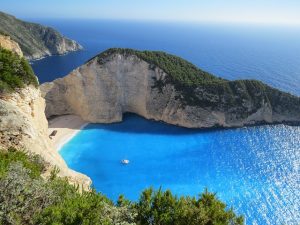
The Peloponnese is not short of outstanding beaches, and what sets them apart is their relative quietness compared to the Greek islands. Voidokilia, a perfect horseshoe bay of fine white sand at the tip of the Navarino lagoon near Pylos in the southwest, is frequently ranked among the most beautiful beaches in all of Greece. The water is extraordinarily clear, and the dunes backing the beach are a protected nature reserve free of commercial development.
Stoupa, in the western Mani, is one of the most popular beach resorts on the peninsula, with two connected sandy coves, excellent tavernas and a genuinely relaxed family atmosphere. Kardamyli to the north offers wilder scenery and pebble coves for those who prefer seclusion. On the eastern coast, the extraordinary rock fortress of Monemvasia rises from the Aegean like a ship under sail — a complete medieval Byzantine city built on a single isolated rock connected to the mainland by a causeway. The beaches below are quiet and clear, and the walled town above is one of the finest medieval monuments in the Mediterranean world.
The Peloponnese produces some of the most celebrated food in Greece. Kalamata, the regional capital of the southern Peloponnese, gives its name to the world-famous Kalamata olive — plump, dark and intensely flavoured — and the local olive oil is among the finest in Europe with Protected Designation of Origin status. Messinian cuisine is built around extraordinary olive oil, fresh seasonal vegetables, lamb slow-cooked with herbs, wild greens and fresh fish landed daily at the small harbours, and the region’s tavernas serve this produce with unpretentious confidence.
The Peloponnese is also one of Greece’s most important wine regions. The Nemea appellation in the northeastern Peloponnese produces structured, age-worthy red wines from the Agiorgitiko grape — rich, dark wines with impressive depth that compare favourably with good southern French reds. Mantinia, set high on the Arcadian plateau, produces distinctive aromatic whites from the Moschofilero grape, with a delicate floral character that pairs wonderfully with the local cuisine. Wine tourism is growing rapidly across the region, with a number of excellent estate wineries welcoming visitors for tastings and cellar tours.
Kalamata International Airport (KLX) is the main gateway to the southern and western Peloponnese, with direct charter flights from several UK airports during the summer season, including departures from Manchester, Birmingham and London Gatwick. Athens International Airport (ATH) offers far more frequent year-round connections from the UK, with the Peloponnese accessible by road in around two hours via the striking Rio-Antirrio suspension bridge or the coastal Corinth motorway.
Patras, the largest city in the Peloponnese, operates ferry connections from Italy (Ancona, Bari and Venice), making the region part of a popular slow-travel itinerary for UK visitors who wish to combine Greece with southern Italy or the Adriatic coast. Comfortable intercity buses (KTEL) connect Athens to Nafplio, Corinth, Kalamata and Sparta, and a hire car is strongly recommended for exploring the full breadth of the peninsula. For peace of mind when booking, always check your holiday is ABTA protected.
For those considering a multi-centre trip or planning a future visit, Zante and Skiathos are among the other Greek destinations worth exploring.
Search4Sun compares thousands of Peloponnese holiday deals from the UK’s leading tour operators, with departures from local airports across the UK. Whether you want a self-catering villa near the Argolic Gulf, a boutique hotel in Nafplio or a beach resort package on the Messinian Riviera, we can help you compare deals and find the right option. For peace of mind when booking, always check your holiday is ABTA protected.
For last-minute Peloponnese deals, check LastMinute.com for the latest availability and rates. See also our Greece holidays page and related destinations including Corfu and Crete.
Nafplio is widely regarded as the best overall base in the Peloponnese. The town is genuinely beautiful, centrally positioned for the Argolis sights — Mycenae, Epidaurus and Tiryns are all within an hour’s drive — has excellent accommodation at all price points, and is one of the most pleasurable places to spend an evening in all of mainland Greece. The Venetian harbour, the Palamidi fortress and the warren of backstreets repay exploration for days.
For those focused on the southern Peloponnese, Kalamata offers excellent practical facilities and direct airport access, while Stoupa and Kardamyli are ideal for those prioritising beaches and the Mani experience. Ancient Olympia can be visited as a day trip from either base, and is also served by its own small selection of hotels for those who want to be first through the gates in the morning.
A week is the minimum to experience the Peloponnese properly, allowing visits to the main ancient sites and at least one stretch of coastline. Two weeks is far more satisfying, allowing for a relaxed exploration of the Mani Peninsula and Monemvasia in the south alongside the Argolis sights in the north, with time to linger over meals and explore smaller villages at a pace that suits the region.
Many UK visitors combine the Peloponnese with two or three nights in Athens. The capital is around two hours from Corinth by road, and the Acropolis and National Archaeological Museum are genuinely unmissable. A week in the Peloponnese followed by a short city break in Athens makes an outstanding two-week itinerary.
The Peloponnese has some of the finest beaches on the Greek mainland. Voidokilia near Pylos in the southwest is one of the most spectacular in the entire country — a perfect arc of white sand with crystal-clear water and a protected dune system behind it. Stoupa in the Mani has excellent sandy beaches with all facilities. The coves below Monemvasia are quiet and beautifully clear, while Kardamyli offers dramatic pebble beaches backed by olive groves and mountains.
The key advantage of Peloponnese beaches is that they are markedly less busy than equivalent beaches on the Greek islands in peak season, which is a significant plus for families or anyone who wants genuine space. The sea water temperature is warm enough for comfortable swimming from late May through to October.
The Peloponnese suits families very well, particularly those with children who can engage with history and archaeology. Ancient Olympia is especially popular with younger visitors — the original stadium offers an irresistible opportunity to race, and the museum brings the ancient world to life with impressive clarity. The sandy beaches at Stoupa and the Messinian Riviera are shallow, safe and well-suited to families with young children.
The region is also significantly less intensely touristed than the most popular Greek islands, which translates to quieter roads, more relaxed restaurants, better-value accommodation and a generally calmer experience. Self-catering villas with private pools are widely available and often represent outstanding value compared to equivalent island properties.
May, June and September are the ideal months for a Peloponnese holiday. The weather is warm and reliably sunny, the sea is at a comfortable swimming temperature, the ancient sites are far from their most crowded and prices are considerably lower than in July and August. The wildflower displays in April and May — particularly across the Mani and in the foothills of the Taygetos — are spectacular, and the olive harvest in October and November is a wonderful time to experience authentic local life.
July and August are the peak months, with temperatures regularly exceeding 35°C inland, particularly around the ancient sites. If visiting in high summer, arriving at Olympia, Mycenae or Epidaurus before 9am makes an enormous difference to both comfort and the quality of the experience. October remains very mild and is excellent for sightseeing, hiking and wine tastings across the Nemea region.
Most popular full-day tours


Visa requirements vary significantly by nationality. We recommend contacting your local embassy or immigration office for accurate and up-to-date information.
Check requirements at IATA Travel Centre →| Month | Avg Temp (°C) | Avg Rainfall (mm) |
|---|---|---|
| Jan | 4.3°C | 81.4 mm |
| Feb | 4.4°C | 37.6 mm |
| Mar | 6.4°C | 49.6 mm |
| Apr | 10.4°C | 41.6 mm |
| May | 15.3°C | 33.1 mm |
| Jun | 20.8°C | 30.3 mm |
| Jul | 24.3°C | 3.8 mm |
| Aug | 23.1°C | 12.9 mm |
| Sep | 18.5°C | 29.7 mm |
| Oct | 13.5°C | 38.7 mm |
| Nov | 9.7°C | 87 mm |
| Dec | 6°C | 72.4 mm |
Search4Sun has been comparing UK holiday packages since 2005. We work with some of the best ABTA-registered operators.