Last updated: October 2026
Crete holidays offer an unparalleled breadth of experience that makes Greece’s largest island the most versatile destination in the Aegean. This is a place where you can explore a 4,000-year-old Minoan palace in the morning, walk through Europe’s longest gorge in the afternoon, and eat an outstanding meal in a Venetian harbour town by evening. Crete is larger, more varied and in many ways more complex than any other Greek island – and that is precisely its appeal for discerning UK travellers.
Crete suits every type of holiday-maker: families seeking safe sandy beaches and good-value resorts, couples looking for romantic Venetian harbours and exceptional food, culture enthusiasts drawn by Minoan civilisation and Ottoman history, and active travellers who want hiking, cycling and water sports. The island’s sheer size – spanning some 250 kilometres from east to west – means there are quiet corners and lively resorts in equal measure, often within easy reach of one another.
Heraklion is Crete’s capital and largest city – a busy, authentic Greek urban centre that is often overlooked by package holiday-makers but rewards those who spend time exploring it. The city’s excellent Archaeological Museum houses the finest collection of Minoan artefacts in the world, including the famous bull-leaping frescoes from Knossos. The old Venetian harbour, Lion Fountain and city walls are all worth seeing.
The Palace of Knossos, just outside the city, is one of the most important archaeological sites in Europe. Dating back to around 1,900 BC, this vast Minoan palace complex – partially reconstructed in controversial but visually striking style – tells the story of Europe’s first great civilisation.
The labyrinthine layout of the palace gave rise to the legend of the Minotaur and the labyrinth. Allow at least half a day for a thorough visit, and book tickets in advance in peak summer to avoid long queues.
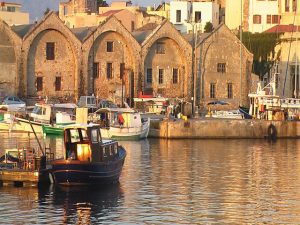
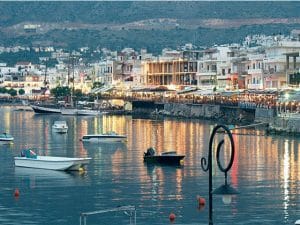
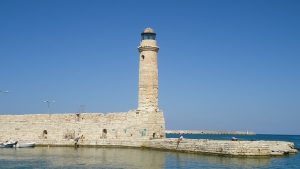
Chania, on Crete’s north-west coast, is widely regarded as the island’s most beautiful and atmospheric town. Its Venetian harbour – a crescent of old stone buildings reflected in the water, watched over by a lighthouse – is one of the most picturesque settings in all of Greece. The narrow streets of the old town wind between Venetian, Ottoman and Greek buildings, with an abundance of excellent restaurants, boutique hotels and independent shops.
The covered market at the heart of the old town is a great place to sample local Cretan produce – honey, olive oil, dried herbs, local cheese and wine all make excellent gifts to bring home. The beaches west of Chania – at Platanias, Agia Marina and Stalos – are long, sandy and popular with families staying in this part of the island. The Samaria Gorge trailhead at Xyloskalo is around 45 minutes from Chania by bus or taxi.
Rethymnon sits midway along Crete’s north coast between Heraklion and Chania, and its old town is one of the best-preserved in Greece. Venetian and Ottoman layers of history coexist beautifully here – a Venetian fort overlooks the harbour, while minarets, Turkish fountains and mosque domes punctuate the skyline. The old town’s lanes are a joy to explore on foot in the cool of the evening.
The long sandy beach that stretches east from the old harbour is one of Crete’s best town beaches, easily accessible from accommodation in the central area. Rethymnon is a popular base for touring Crete, with good road connections both east and west. The monastery of Arkadi, about 25 km south of the town, is one of Crete’s most important historical sites – a place of pilgrimage connected to the island’s resistance to Ottoman rule.
The north-central coast east of Heraklion is home to Crete’s liveliest and most developed resort strip. Malia, Stalis and Hersonissos form a near-continuous ribbon of hotels, apartments, bars, restaurants and beach clubs that has long been a favourite with younger British travellers seeking a lively, affordable holiday. The beaches are long and sandy, the nightlife is energetic and package deals are some of the most competitive in Greece.
Hersonissos is the largest of the three and has a good mix of beach facilities, watersports and evening entertainment. The neighbouring water park – one of the largest in Greece – is an excellent family option for a day away from the beach. For those wanting a balance of resort facilities and access to cultural sites, this strip is also surprisingly well-placed for day trips to Knossos, Heraklion and the beautiful eastern coast.
The Samaria Gorge, cutting through the White Mountains of western Crete, is one of Europe’s most famous and spectacular walking routes. At approximately 16 kilometres in length, it is Europe’s longest gorge and traverses dramatic scenery from the plateau of Omalos down to the coastal village of Agia Roumeli on the Libyan Sea. The walk takes most people 5-7 hours and is graded as moderate.
The gorge is open from May to October, subject to water conditions in spring, and is a major highlight for active visitors to a Crete holiday. The walk passes through towering rock walls that narrow to just 3 metres at the famous Sideroportes (Iron Gates), one of the gorge’s most dramatic sections.
Sturdy footwear, plenty of water and an early start are essential. The return journey from Agia Roumeli is by boat to Hora Sfakion, then bus back to Chania.
Balos lagoon at the far north-west tip of Crete is one of the island’s most spectacular natural attractions. The shallow turquoise and pink-tinged waters of the lagoon, backed by sand dunes and dramatic rocky headlands, create a scene of extraordinary beauty. The lagoon is reached either by ferry from the port of Kissamos or by a rough track passable in a 4WD vehicle, followed by a 20-minute walk down to the beach.
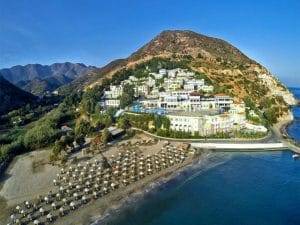
At the opposite end of the island, the upmarket resort of Elounda on the Gulf of Mirabello in eastern Crete offers a completely different experience – calm, clear waters, excellent seafood, and some of Greece’s finest luxury hotels. The tiny island of Spinalonga just offshore, a former Venetian fort and later a leper colony, is one of Crete’s most visited historical attractions and the setting of Victoria Hislop’s novel The Island.
Cretan cuisine is considered among the healthiest and most flavourful in the Mediterranean. The island’s fertile interior produces exceptional olive oil, fresh vegetables, cheeses, honey and herbs. Traditional dishes include dakos – a barley rusk topped with tomatoes, feta and olive oil – slow-cooked lamb with artichokes, kalitsounia cheese pastries and staka, a rich cream made from sheep’s milk.
Cretan wine has improved enormously in recent decades and is now taken seriously by wine lovers. Indigenous grape varieties including Vidiano, Kotsifali and Mandilari produce interesting, food-friendly wines very different from international varieties.
Many tavernas pour local bulk wine by the carafe – rough and ready but perfectly enjoyable. Tsikoudia, a grape-based spirit similar to grappa, is served as a complimentary digestif in traditional establishments.
Crete has two main international airports: Heraklion Nikos Kazantzakis (HER) in the centre-north of the island, and Chania International (CHQ) in the west. Both receive direct flights from UK airports, with flight times of approximately 3.5 hours from London.
Direct flights operate from Heathrow, Gatwick, Manchester, Birmingham, Bristol and other UK regional airports throughout the summer season.
Transfers from Heraklion airport to central resorts take 20-90 minutes depending on destination. Chania airport is 15 km east of the city.
Car hire is an excellent investment on Crete given the island’s size – many of the best beaches and sites require independent transport to reach. For peace of mind when booking, always check your holiday is ABTA protected.
| Airport | Heraklion (HER) and Chania (CHQ) |
| Main resorts | Malia, Hersonissos, Rethymnon, Chania, Elounda, Agios Nikolaos, Agia Pelagia |
| Highlight | Minoan Palace of Knossos and Samaria Gorge |
| Best for | All types – culture, beaches, families, couples, food, active holidays |
| Climate | Hot summers, mild winters; south coast warmer and drier than north |
| Flight time from London | Approximately 3.5 hours |
| Currency | Euro (EUR) |
| Language | Greek |
Search4Sun compares thousands of Crete holiday deals from the UK’s leading tour operators, with departures from local airports across the UK. For peace of mind when booking, always check your holiday is ABTA protected.
For last-minute Crete deals, check LastMinute.com for the latest availability and rates.
It depends on what you want. For lively resorts and value for money, the central north coast around Malia and Hersonissos is hard to beat.
For culture and the most beautiful town setting, Chania on the west coast is exceptional. Rethymnon offers a good balance of old town charm and beach resort facilities.
Elounda and Agios Nikolaos in the east are the most upmarket areas, with luxury hotels and a quieter atmosphere. Families often do best based centrally near Hersonissos for easy access to beaches and attractions. First-time visitors tend to love Chania for its beauty, while repeat visitors often seek out the quieter eastern and southern coasts.
Crete is one of the best Greek islands for families, offering a huge range of sandy beaches, water parks, boat trips and family-friendly resorts. The long shallow beach at Tigaki on Kos, Platanias near Chania and the gentle bays around Elounda are all excellent for children. Many hotels on the island are specifically geared towards families with kids’ clubs and entertainment.
The Water City water park near Hersonissos is a full-day family attraction. Boat trips to Spinalonga, the aquarium near Heraklion and the dinosaur park at Hersonissos all provide non-beach entertainment. Cretan people are wonderfully warm and welcoming to children, making dining out with the family a relaxed and enjoyable experience.
A hire car is strongly recommended in Crete, especially if you want to explore beyond your resort. The island is large – it takes several hours to drive from one end to the other – and many of the best beaches, gorges, villages and sites are not served by public buses. Car hire is very affordable and widely available.
Roads in Crete range from excellent modern highways along the north coast to rough mountain tracks in the interior and south. A standard car handles all main roads without issue. For exploring more remote southern beaches and mountain villages, a higher-clearance vehicle or 4WD is useful but not essential.
Cretan food stands apart even from mainstream Greek cuisine thanks to its extraordinary local produce and ancient culinary traditions. The island’s olive oil is considered among the finest in the world, and it forms the base of almost every dish. Cretan honey, particularly thyme honey from the mountainous interior, is equally celebrated.
Traditional Cretan dishes like dakos, snail stew (cochli bourbouristi), slow-roasted lamb and wild greens pies made with local greens (horta) are increasingly recognised internationally as part of the Mediterranean diet. Eating in a traditional kafeneion or family-run taverna away from the tourist resorts gives the most authentic experience of Cretan hospitality and cuisine.
May, June and September are the best months for a Crete holiday. Both offer warm, reliable sunshine and comfortably warm seas without the intensity or crowds of high summer.
September is excellent too. The sea is at its warmest after the summer heat, and resorts are noticeably quieter once schools return in the UK.
July and August are the hottest and busiest months, particularly inland and around Heraklion. The south coast stays warmer for longer, often pleasant well into October.
The Samaria Gorge is only open from May to October, so plan accordingly if you want to walk it. Most coastal tourist facilities close between November and April. Crete’s size means a few resorts, particularly in the south, stay milder than the rest of Greece even in deep winter.
Most popular full-day tours


Visa requirements vary significantly by nationality. We recommend contacting your local embassy or immigration office for accurate and up-to-date information.
Check requirements at IATA Travel Centre →| Month | Avg Temp (°C) | Avg Rainfall (mm) |
|---|---|---|
| Jan | 2°C | 145.9 mm |
| Feb | 1.4°C | 122.1 mm |
| Mar | 3.7°C | 114.5 mm |
| Apr | 8.3°C | 66.4 mm |
| May | 13°C | 101.3 mm |
| Jun | 16.9°C | 30.8 mm |
| Jul | 19°C | 6 mm |
| Aug | 18.5°C | 12.9 mm |
| Sep | 15°C | 46.3 mm |
| Oct | 10.7°C | 81.4 mm |
| Nov | 7.6°C | 61 mm |
| Dec | 3.8°C | 135.5 mm |
Search4Sun has been comparing UK holiday packages since 2005. We work with some of the best ABTA-registered operators.