HomeDestinationScandinavia
Last updated: October 2026
Scandinavia holidays deliver some of the most extraordinary natural and cultural experiences available to UK travellers — from the shimmering curtains of the Northern Lights over Arctic Finland to the cliff-edged drama of Norway’s UNESCO-listed fjords, from the elegant waterfront of Stockholm’s Old Town to the reindeer-herding traditions of the Sami people in the far north. These are destinations that reward visitors with experiences genuinely unlike anything available closer to home.
Whether you are drawn to Norway holidays for the fjords, Finland holidays for Lapland and the Northern Lights, or Sweden holidays for Stockholm and the archipelago, this guide covers everything you need to plan an unforgettable Scandinavia holiday.
Scandinavia offers a quality of natural environment and a standard of living — reflected in the quality of infrastructure, food and accommodation — that is simply unmatched in Europe. The region comprises Norway, Sweden, Denmark and Finland (and Iceland by some definitions), and each country brings a distinct character and set of attractions that makes the region endlessly varied for repeat visitors.
The natural landscapes are the primary draw: Norway’s fjords, carved by glaciers over millions of years, are among the most dramatic landforms on earth. Finland’s vast forests and 188,000 lakes create a wilderness experience unique in Europe. Sweden’s Stockholm archipelago — 30,000 islands scattered across the Baltic — is one of the world’s great sailing and island-hopping destinations. Above the Arctic Circle in all three countries, the Northern Lights and the midnight sun create seasonal experiences that are genuinely magical and impossible to replicate anywhere else.
The cities — Oslo, Stockholm, Helsinki, Copenhagen — consistently rank among the world’s most liveable, most design-conscious and most culturally rich. The food scenes in all four capitals have transformed dramatically over the past two decades, with Scandinavian cuisine now internationally recognised as among Europe’s most innovative. For UK visitors, the short flight times and high English proficiency throughout the region make Scandinavia one of the most accessible of all “different” destinations.
Norway holidays centre on the country’s extraordinary fjord landscapes — UNESCO-listed and genuinely without equal anywhere else on earth. The Sognefjord, at 205 kilometres long and 1,308 metres deep, is the longest and deepest in the world. The Geirangerfjord, with its famous “Seven Sisters” waterfall cascading directly into the water from sheer cliff walls, is the most photographed. The Lysefjord, reached by the famous Preikestolen (Pulpit Rock) hike, puts visitors on a sheer granite ledge 604 metres above the fjord — one of Norway’s most vertiginous and unforgettable viewpoints.
Bergen, Norway’s fjord gateway city, is one of the most charming cities in northern Europe: a compact harbour city of coloured wooden warehouses (the UNESCO-listed Bryggen wharf), cobbled streets, excellent seafood restaurants and a funicular railway rising to views across the surrounding mountains and fjords. Oslo, the capital, combines world-class museums — the Viking Ship Museum, the Munch Museum and the Fram Museum among them — with a waterfront redevelopment that has transformed the city into one of Europe’s most architecturally ambitious capitals.
Above the Arctic Circle, Tromsø is the premier Northern Lights destination in Norway, offering the best statistical chance of aurora sightings from September to March. The Lofoten Islands — a remote archipelago of dramatic peaks rising from the sea — attract visitors year-round for their wild beauty, traditional fishing villages and outstanding hiking. The Flam Railway, descending 865 metres through waterfalls and mountain scenery in one of the world’s most scenic train journeys, is a highlight of any Norway holiday.
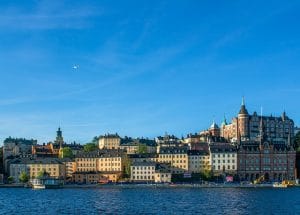
Sweden holidays offer one of Europe’s finest capital cities in Stockholm — a city built across 14 islands at the point where Lake Mälaren meets the Baltic Sea, with an Old Town (Gamla Stan) of medieval streets and coloured buildings that is one of the most beautiful in northern Europe. The Vasa Museum, housing a perfectly preserved 17th-century warship that sank on its maiden voyage in Stockholm harbour, is one of the most extraordinary museum experiences in the world.
Beyond Stockholm, Sweden’s summer archipelago — 30,000 islands within easy reach of the capital by ferry — is one of the country’s greatest pleasures. Sailing, kayaking, cycling between islands and the unhurried pace of Swedish summer cottage life on the smaller islands is a quintessential Scandinavian experience. Göteborg (Gothenburg), Sweden’s second city, has a deserved reputation as a food destination, with more Michelin-starred restaurants per capita than almost any city in Europe.
Swedish Lapland in the far north offers experiences unlike anything available further south: the Ice Hotel at Jukkasjärvi (rebuilt entirely from ice each winter), reindeer herding with Sami communities, Northern Lights safaris from September to March, and the extraordinary midnight sun from late May to mid-July when the sun never sets. Abisko National Park is considered one of the finest Northern Lights viewing locations in Scandinavia due to its location in a naturally low-precipitation microclimate that keeps skies clear more consistently than other areas.
Finland holidays deliver Europe’s most consistently magical winter experience — the Santa Claus Village at Rovaniemi on the Arctic Circle, reindeer sleigh rides through snow-covered forests, husky safaris across frozen lakes and the Northern Lights dancing overhead in the dark Arctic sky. Lapland in December is one of the most purely magical holiday experiences available to UK families, and Finland is the most popular destination for UK visitors seeking it.
Helsinki, Finland’s capital, is a sophisticated and design-forward city that rewards several days of exploration. The Senate Square with its neoclassical cathedral, the Art Nouveau National Museum, the extraordinary underground Temppeliaukio (Rock) Church hewn directly from solid granite, and the Suomenlinna sea fortress on islands in the harbour — a UNESCO World Heritage Site — are the headline attractions. The Design District in the south of the city centre is one of Europe’s finest concentrations of independent design shops, galleries and studios.
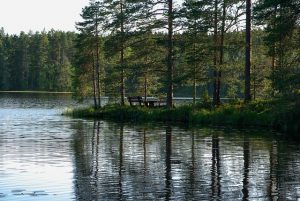
Finland’s lake district — covering a vast area of central and eastern Finland — is one of Europe’s great natural landscapes in summer: 188,000 lakes connected by rivers and canals, surrounded by ancient boreal forest, accessible by traditional steamboat cruises and kayak. The sauna — Finland’s greatest cultural institution, with more saunas than cars in the country — is an essential part of any Finnish holiday, ideally experienced in a traditional lakeside smoke sauna followed by a swim in the cool lake water.
The Scandinavian capitals share a commitment to design, sustainability and quality of life that is reflected in their food scenes, architecture and public spaces. Oslo’s Aker Brygge and Tjøuvholmen waterfront developments have transformed the Norwegian capital into one of Europe’s most architecturally exciting cities, while the National Museum — housing Edvard Munch’s The Scream in a purpose-built gallery — is one of northern Europe’s finest.
Stockholm’s Gamla Stan is arguably the most beautiful medieval city centre in Scandinavia, while the ABBA Museum and the Fotografiska (Photography Museum) on Södermalm provide cultural depth alongside the historical sights. Helsinki’s Hakaniemi Market Hall and the weekend Hietalahti flea market are among the best market experiences in the Nordic countries, and the city’s restaurant scene — led by a wave of young Finnish chefs championing local and foraged ingredients — has earned international recognition.
All four Scandinavian capitals are well connected to the UK by direct flights and are straightforward city break destinations for long weekends or extended stays. The high quality of public transport in all cities makes it easy to navigate without a hire car, and the near-universal English proficiency removes any language barrier for UK visitors.
Direct flights from the UK serve all major Scandinavian cities. Oslo (OSL) is approximately 2 hours from London; Stockholm Arlanda (ARN) is around 2 hours 30 minutes; Helsinki (HEL) is approximately 3 hours; Rovaniemi (RVN) in Finnish Lapland is around 3 hours 30 minutes. Bergen (BGO) and Tromsø (TOS) in Norway are also served directly from UK airports. SAS, Norwegian Air, British Airways, easyJet and Finnair all operate relevant routes.
Internal travel within Scandinavia is excellent. Norway’s fjord region is best explored by a combination of train, ferry and bus (the Norway in a Nutshell route is a classic). Sweden’s rail network connects Stockholm to Gothenburg in 3 hours by high-speed train. Finland’s domestic flights connect Helsinki to Rovaniemi in 1 hour 15 minutes, making Lapland very accessible as an add-on to a Helsinki city break.
| Countries | Norway, Sweden, Finland (and Denmark) |
|---|---|
| Main Airports | Oslo (OSL), Stockholm (ARN), Helsinki (HEL), Bergen (BGO), Rovaniemi (RVN) |
| Highlight | Norwegian fjords, Finnish Lapland and the Northern Lights |
| Best For | Nature, city breaks, Northern Lights, winter adventures, culture |
| Climate | Cool summers; cold winters; Arctic conditions above the Arctic Circle |
| Flight Time from London | 2 hours (Oslo) to 3.5 hours (Lapland) |
| Currencies | Norwegian Krone (NOK), Swedish Krona (SEK), Euro (Finland) |
| Languages | Norwegian, Swedish, Finnish (English universally spoken) |
Look for ABTA membership, ATOL protection or ABTOT cover — these schemes protect your money if an operator ceases trading before or during your holiday. For a plain-English guide to what each scheme covers, read our holiday protection guide.
For last-minute deals, check LastMinute.com for the latest availability and rates.
It depends entirely on what you want to experience. For the Northern Lights, visit Norway, Finland or Sweden from September to March, with the darkest months (November–February) offering the longest viewing windows. For midnight sun and outdoor activities, June and July are ideal — long warm days with almost no darkness above the Arctic Circle.
For city breaks and general sightseeing, May, June and September offer the best balance of comfortable weather and reasonable prices. July and August are peak season with higher prices and more crowds. Winter city breaks to Oslo, Stockholm and Helsinki are wonderful — Christmas markets, snow-covered streets and excellent indoor cultural attractions make December and January particularly atmospheric.
Scandinavia has a well-deserved reputation for high prices, particularly Norway, which consistently ranks as one of the world’s most expensive countries. Eating out, alcohol and accommodation all cost significantly more than in southern European destinations. However, the quality is typically very high and the experience justifies the expenditure for most visitors.
Sweden and Finland are somewhat more affordable than Norway, and all three countries offer good-value self-catering options for families and groups. Cooking your own food, using public transport instead of taxis and booking accommodation well in advance significantly reduces costs. UK tour operators often offer good-value packages that include flights, transfers and accommodation at rates that compare favourably to booking independently.
No — all Scandinavian countries (Norway, Sweden, Denmark, Finland) are part of the Schengen Area and UK citizens can visit for up to 90 days in any 180-day period without a visa. A valid UK passport is required. Norway is in Schengen but not in the EU; Finland and Sweden are both EU and Schengen members.
Post-Brexit, UK visitors are subject to the standard Schengen 90-day rule across all member states combined, not 90 days per country. The ETIAS travel authorisation system for UK visitors to Schengen countries is expected to be introduced — check current requirements before travelling.
Finnish Lapland is the most popular Scandinavian family destination, particularly for the Christmas period when the Santa Claus Village at Rovaniemi delivers a genuinely magical experience for young children. Reindeer sleigh rides, husky safaris, snowmobile tours and the possibility of seeing the Northern Lights create a multi-layered adventure that families remember for years.
For summer family holidays, the Swedish and Norwegian fjord and island landscapes offer excellent outdoor activities — hiking, cycling, kayaking and boat trips — at a level of natural intensity that is impossible to replicate in more crowded southern European destinations. Copenhagen in Denmark is the most family-friendly capital city in Scandinavia, with LEGOLAND within easy reach and Tivoli Gardens in the city centre.
If you book a flight-inclusive Scandinavian package through a UK tour operator holding an ATOL licence, your money is fully protected if the operator fails. Repatriation is also covered. Booking flights and accommodation separately on different websites removes this protection. Our holiday protection guide explains ATOL, ABTA and your rights under Section 75 of the Consumer Credit Act.
All packages listed on Search4Sun are offered by ATOL-licensed UK tour operators, so you can compare and book with complete confidence.

Visa requirements vary significantly by nationality. We recommend contacting your local embassy or immigration office for accurate and up-to-date information.
Check requirements at IATA Travel Centre →| Month | Avg Temp (°C) | Avg Rainfall (mm) |
|---|---|---|
| Jan | -6.2°C | 56.5 mm |
| Feb | -5°C | 22.7 mm |
| Mar | -1.3°C | 32.5 mm |
| Apr | 1.7°C | 37.5 mm |
| May | 9°C | 43.6 mm |
| Jun | 14.4°C | 75.2 mm |
| Jul | 15.7°C | 128.3 mm |
| Aug | 13.9°C | 124.3 mm |
| Sep | 10.3°C | 74.3 mm |
| Oct | 4.6°C | 58.9 mm |
| Nov | -1.5°C | 57.5 mm |
| Dec | -5.5°C | 33 mm |
Search4Sun has been comparing UK holiday packages since 2005. We work with some of the best ABTA-registered operators.