Last updated: October 2026
Cuba holidays take you to the most extraordinary country in the Caribbean — an island of colonial cities, classic American cars, world-class tobacco and rum, pulsating music on every corner and some of the most beautiful beaches in the region, all wrapped in a political and cultural history that makes Cuba unlike anywhere else on earth. No other Caribbean destination offers this combination of natural beauty and human fascination.
This guide covers everything you need to plan and book a Cuba holiday from the UK — Havana, the beaches, what to see inland, practical travel requirements and the essential cultural context that makes Cuba such a remarkable destination.
Cuba holidays attract visitors who want something genuinely different — a destination that cannot be replicated anywhere else and that offers an experience of cultural depth, natural beauty and human warmth that more mainstream Caribbean resorts cannot match. Cuba is the largest island in the Caribbean, with a landscape that ranges from the tobacco fields of Pinar del Río to the Sierra Maestra mountains of the east and the palm-lined beaches of the north coast.
The unique political history since the 1959 Revolution has shaped Cuba into something that feels entirely its own: a country where 1950s American cars share the road with horse-drawn carts and modern Chinese buses; where colonial Spanish architecture is beautifully preserved alongside Soviet-era apartment blocks; where world-class musicians play in crumbling ballrooms that have seen better days but retain an atmosphere no purpose-built venue can manufacture.
Cuba is also changing. The gradual opening of the country to international visitors over the past decade has brought improvements in tourist infrastructure while — so far — preserving the essential character that makes the island so compelling. Visiting Cuba now means experiencing the country before those changes accelerate further, which gives the experience an urgency and significance beyond the pleasures of the beach and the rum bar.
Havana is one of the most atmospheric cities in the world — a Caribbean capital of imperial Spanish grandeur that has been crumbling magnificently for sixty years and retains an extraordinary beauty in its decay. The Old Havana (La Habana Vieja) district, a UNESCO World Heritage Site, contains one of the finest concentrations of Spanish colonial architecture in the Americas — baroque churches, neoclassical palaces and narrow cobbled streets lined with ochre and pastel-coloured buildings that have barely changed since the 18th century.
The Malecón — Havana’s famous seafront promenade — is the social heart of the city, where locals gather at all hours to fish, socialise, play music and watch the waves break against the sea wall. Walking the full length of the Malecón from Old Havana to the Vedado district at dusk, with the city’s music drifting across the water and the light going gold behind the old forts, is one of the great urban experiences in the Caribbean.
The Fábrica de Tabacos Partagás cigar factory (or its relocated successor), the Museum of the Revolution housed in the former Presidential Palace, the Hemingway haunts of La Bodeguita del Medio and El Floridita, and the revolutionary murals of the Plaza de la Revolución are among the essential Havana experiences. The city rewards days of slow, curious walking more than any organised itinerary.
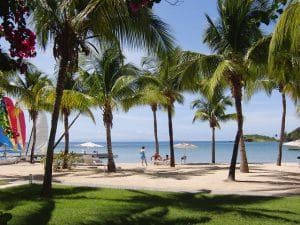
Varadero, 140 kilometres east of Havana on a long peninsula jutting into the Florida Straits, is Cuba’s main beach resort and one of the Caribbean’s finest — over 20 kilometres of unbroken white sand beach backed by a strip of all-inclusive hotels. The sea is calm, warm and brilliantly clear; the beach itself is one of the longest and most beautiful in the region. Varadero’s all-inclusive hotels represent outstanding value by Caribbean standards.
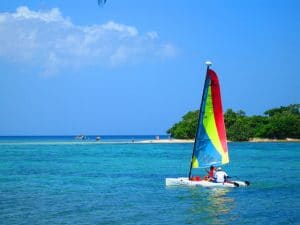
Cayo Coco and Cayo Guillermo, linked to the mainland by a long causeway across the Bahía de Perros, are spectacular cay beaches on Cuba’s northern coast — remote, undeveloped and extraordinarily beautiful, with water of a clarity and colour that rivals anything in the Bahamas or the Turks and Caicos. The flamingo population in the surrounding lagoons adds a surreal and memorable element to the setting.
Trinidad on the south coast, Cuba’s best-preserved colonial city, is within reach of the beautiful Playa Ancón — a long, palm-backed beach of fine white sand that is among the finest on the south coast and much less visited than the northern resorts. Combining a few days in Trinidad with beach time at Ancón is one of the classic Cuba itinerary options.
The Viñales Valley in Pinar del Río province, a UNESCO World Heritage landscape of dramatic limestone mogotes (steep-sided hills rising from flat farmland) and red-soiled tobacco fields, is one of the most beautiful and distinctive landscapes in the Caribbean. The valley’s tobacco is the finest in the world — the source of the leaves that roll into Cohiba, Montecristo and Romeo y Julieta cigars — and visiting a small family vega (farm) to see tobacco grown and rolled by hand is a remarkable experience available to visitors who take a local guide.
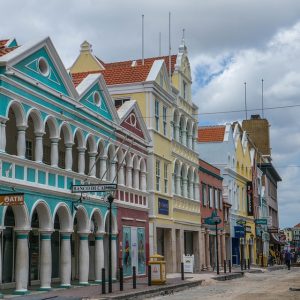
The colonial city of Trinidad, founded in 1514 and declared a UNESCO World Heritage Site, is the best-preserved example of a Spanish colonial town in the Americas. The cobbled streets, terracotta-tiled rooftops, pastel-painted mansions and central Plaza Mayor have been barely touched since the 18th century, when Trinidad was one of the wealthiest cities in the Caribbean thanks to the surrounding sugar plantations. The evening salsa scene in the open-air bars around the main square is one of Cuba’s great pleasures.
Cuban food has historically been limited by the country’s economic conditions, but the growth of private paladares (family-run restaurants) over the past two decades has produced a genuine restaurant renaissance, particularly in Havana and Trinidad. Traditional Cuban staples — ropa vieja (slow-cooked shredded beef), arroz con pollo, congrí (rice and black beans) and fried plantain — are the backbone of most menus, supplemented in the better paladares by fresh seafood and more creative preparations using the excellent local produce.
Havana Club rum is the defining spirit, produced in Cuba since 1934 and the base of the classic Cuban cocktails — the Mojito (rum, lime, sugar, mint, soda), the Daiquiri (rum, lime, sugar) and the Cuba Libre (rum, Coca-Cola, lime). All are best drunk in Havana, where the raw materials and the atmosphere conspire to make them taste better than anywhere else on earth.
Cuban music is one of the country’s greatest gifts to the world — son, salsa, mambo, cha-cha-chá, bolero and the extraordinary Afro-Cuban jazz traditions have all produced world-changing music. Live performance is everywhere in Cuba: in the hotels, the street corners, the paladares and the legendary music venues of Havana like the Casa de la Música and the Jazz Café. No visit to Cuba is complete without a proper evening of live music.
Direct charter flights from UK airports serve Cuba throughout the year, with the widest choice of routes and departure points during the winter season (November to April). TUI, Jet2 and other charter operators fly to Havana’s José Martí Airport and to Varadero’s Juan Gualberto Gómez Airport from London and regional UK airports. Flight time is approximately nine to ten hours.
All visitors to Cuba require a tourist card (sometimes called a visa) — a pink or green card issued by airlines, travel agents or the Cuban embassy, depending on the travel arrangement. UK travellers flying directly from the UK on a charter flight typically have the tourist card included in the package or can purchase it from the airline. The card must be presented on arrival.
Search4Sun works with leading UK tour operators to find the best value Cuba holidays, with charter flights and all-inclusive packages from local airports across the UK. For peace of mind when booking, always check your holiday is ABTA protected.
For last-minute Cuba deals, check LastMinute.com for the latest availability. Also see our guide to Caribbean holidays for the full regional overview.
Cuba is generally considered one of the safer Caribbean destinations for tourists. Violent crime against visitors is rare and the Cuban government places considerable emphasis on maintaining safety in tourist areas. Petty theft (bag snatching, pickpocketing) does occur in busy areas of Havana and should be guarded against with standard precautions.
The UK Foreign Office travel advice for Cuba should be checked before booking, as the situation regarding US sanctions and their impact on financial services (particularly card payments) can affect the practical aspects of managing money in Cuba. Taking sufficient cash in euros or sterling is advisable.
Cuba is predominantly a cash economy for tourists, and UK visitors should plan to take sufficient cash for their stay. International bank cards linked to US-based payment networks (Visa and Mastercard issued by UK banks) have historically worked unreliably or not at all in Cuban ATMs due to US sanctions on financial institutions dealing with Cuba.
Euros and sterling can be exchanged for Cuban Pesos at official exchange offices (CADECA). Check the current situation with your tour operator before departure, as the picture can change. All-inclusive resorts significantly reduce the cash requirements of a Cuban holiday.
November to April is the dry season and the most comfortable time to visit — temperatures are warm rather than hot (25–30°C), humidity is lower and rainfall minimal. December through March is the peak tourist season. The Havana Jazz Festival in January is a highlight of the cultural calendar.
May through October is the rainy season, with the highest hurricane risk in August and September. Cuba lies within the main Atlantic hurricane belt and has been struck by significant storms. Travel insurance with hurricane cover is essential for visits during this period.
Yes — all UK visitors to Cuba require a tourist card, which functions as a simplified visa. For most UK travellers booking through a tour operator, the tourist card is either included in the package price or can be purchased from the airline before departure.
Independent travellers can obtain the tourist card from the Cuban Embassy in London or through specialist Cuba travel agents. The card is typically valid for 30 days and can be extended once in-country at an immigration office.
Cuba flight-inclusive packages booked through a UK ATOL-licensed tour operator are fully protected — your money is covered if the company fails and repatriation is guaranteed. Booking flights and hotel separately means ATOL protection does not apply. Our holiday protection guide explains ATOL, ABTA and your other options in plain English.
All packages listed on Search4Sun are offered by ATOL-licensed UK tour operators, so you can compare and book with confidence.
Most popular full-day tours


Visa requirements vary significantly by nationality. We recommend contacting your local embassy or immigration office for accurate and up-to-date information.
Check requirements at IATA Travel Centre →| Month | Avg Temp (°C) | Avg Rainfall (mm) |
|---|---|---|
| Jan | 23.1°C | 14.4 mm |
| Feb | 23.6°C | 26.5 mm |
| Mar | 24.5°C | 50 mm |
| Apr | 25.2°C | 43.2 mm |
| May | 26.2°C | 134.9 mm |
| Jun | 26.6°C | 165.3 mm |
| Jul | 27.6°C | 74.5 mm |
| Aug | 27.7°C | 115.9 mm |
| Sep | 27.2°C | 147.1 mm |
| Oct | 25.9°C | 144.2 mm |
| Nov | 24.8°C | 58.4 mm |
| Dec | 23.7°C | 23.7 mm |
Search4Sun has been comparing UK holiday packages since 2005. We work with some of the best ABTA-registered operators.