HomeDestinationSpainCosta Brava
Last updated: October 2026
Costa Brava holidays offer something genuinely different from the typical Spanish beach break — dramatic rocky headlands, hidden coves with translucent water, medieval hilltop towns and a wild, unspoiled coastline stretching 200 kilometres from Blanes to the French border. The Wild Coast (as the name translates) combines outstanding natural scenery with excellent beaches, world-class diving and some of the most authentic Catalan culture in Spain.
The Costa Brava splits into three distinct sections — the southern coast from Blanes to Tossa de Mar, the central section around Palamós and Palafrugell, and the more rugged northern coast up to the French border. Each area has its own character and appeal.
Lloret de Mar holidays are the most popular on the Costa Brava — a large, lively resort with a long sandy beach, a wide range of hotels at every price point and a well-established entertainment and nightlife scene. Lloret is the best-value, best-connected resort on the coast.
The resort beach stretches over a kilometre. Smaller, more sheltered coves sit either side of the main beach — Cala Treumal and Cala Canyelles are easily reached on foot or by boat. Lloret is 75 kilometres from Barcelona and 30 minutes from Girona Airport.
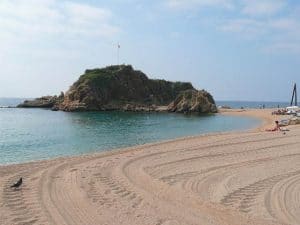
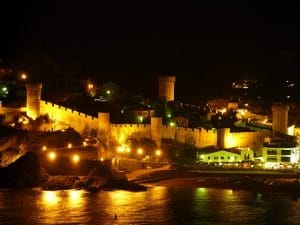
Tossa de Mar holidays attract those looking for something more atmospheric and characterful. The medieval walled town — the Vila Vella — sits on a rocky promontory above the main beach and is one of the most photographed scenes on the entire Spanish coast.
Tossa has a good sandy beach, excellent fish restaurants in the old town and a relaxed, romantic atmosphere. It suits couples and independent travellers who want Costa Brava character without the scale of Lloret. The coves north and south of town are among the most beautiful on the southern coast.
Blanes holidays offer an authentic working fishing town at the southern end of the Costa Brava. The Marimurtra and Pinya de Rosa botanical gardens are two of the finest in Spain. The long sandy beach is backed by a traditional seafront promenade with seafood restaurants.
Blanes is the most affordable base on the coast and the easiest to reach from Barcelona — just 60 kilometres north. It suits families and those wanting a genuine Spanish seaside town rather than a purpose-built resort.
Malgrat de Mar and Santa Susanna sit on the long sandy beach strip just south of Blanes. Both are purpose-built family resorts with a wide selection of large hotels, good beaches and easy access to the Catalan coast. They suit families wanting a reliable, affordable package holiday base.
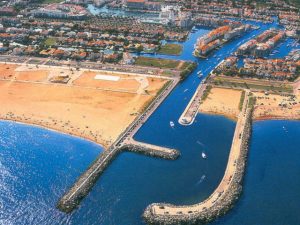
The central Costa Brava around the Baix Empordà area offers a more upmarket, less developed alternative to the busier southern resorts. Platja d’Aro has a good sandy beach and a smart promenade. Palamós is an authentic fishing port with an outstanding seafood market and prawns that are among the most prized in Spain.
The northern Costa Brava — from Roses to Portbou on the French border — is the most dramatic and unspoiled section of the coast. Cadaqués, accessible only by a winding mountain road, is the most beautiful village on the coast — whitewashed houses tumbling down to a clear turquoise bay. Salvador Dalí lived and worked here for most of his life.
Roses has a wide sandy beach, good water sports facilities and easy access to the Cap de Creus Natural Park — the easternmost point of the Iberian Peninsula. The northern coast suits those who want to combine beach holidays with genuine exploration of wild Catalan landscapes.
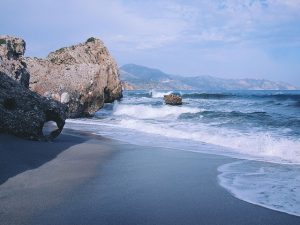
The Costa Brava’s coastline is unlike anywhere else on the Spanish Mediterranean. Rocky headlands divide the coast into hundreds of coves — caletes — with translucent water ranging from deep green to vivid turquoise depending on the depth and angle of light.
The southern section from Blanes to Sant Feliu de Guíxols has the longest sandy beaches. Lloret, Blanes and Malgrat all have wide, well-serviced sandy beaches with full amenities, lifeguards and Blue Flag water quality.
The central and northern sections become more rugged. Hidden coves accessible only by boat or coastal path are a defining feature — Cala Aiguafreda near Begur, Cala Tamariu near Palafrugell and Cala Fornells near Begur are among the most beautiful.
The Camí de Ronda coastal path follows the entire length of the Costa Brava, connecting resorts, villages and remote coves. Walking sections of this path — particularly between Tossa de Mar and Sant Feliu, or around Cap de Creus — is one of the best ways to experience the coast.
The Costa Brava is one of the best diving destinations in the Mediterranean. The Medes Islands marine reserve near Estartit is the jewel — seven small rocky islands and a submerged reef with outstanding biodiversity protected since 1983. Grouper, moray eels, barracuda and octopus are regularly spotted.
Estartit is the dive capital of the coast, with numerous PADI-certified centres offering courses from beginner to advanced. The clear water and relatively shallow dives make it excellent for snorkellers as well as qualified divers. Glass-bottomed boat trips to the Medes Islands run daily in summer.
Sea kayaking is outstanding along the northern Costa Brava — paddling between coves inaccessible by road is one of the best ways to experience the wild coastline. Guided kayak routes around the Cap de Creus headland are available from Cadaqués and Roses.
Cycling is popular on the Vías Verdes greenway network — converted railway lines through the Catalan interior. The Via Verde del Carrilet from Girona to Olot passes through volcanic landscapes and is a well-established family cycling route.
The Costa Brava has one of the richest cultural landscapes of any Spanish coastal region. Salvador Dalí was born in Figueres, worked in Port Lligat near Cadaqués, and transformed the castle at Púbol into a surrealist folly. The three sites form the Dalí Triangle — one of Spain’s most visited cultural circuits.
The Teatre-Museu Dalí in Figueres is the most visited museum in Spain after the Prado — an extraordinary building that is itself a total work of art. Book tickets well in advance in high season as visitor numbers are strictly limited by timed entry.
Girona — 40 kilometres inland — is one of Catalonia’s most beautiful cities. The medieval old city, Jewish quarter (El Call), cathedral and colourful Onyar riverside houses featured extensively in Game of Thrones. Girona is easily reached from any Costa Brava resort for a full day’s culture.
The Empúries archaeological site near L’Escala preserves remarkable Greek and Roman ruins directly on the seafront — the only place in the Iberian Peninsula where both civilisations occupied the same site.
Catalan cuisine is regarded as the most sophisticated regional cooking in Spain. The Costa Brava’s food culture reflects this — fresh seafood, rich stews, local olive oils and wine from the Empordà DO are all outstanding.
Palamós prawns (gambas de Palamós) are among the most prized crustaceans in Spain — large, sweet and intensely flavoured, they are worth planning a meal around. The daily fish market at Palamós is one of the best on the coast to watch the catch come in.
Lloret de Mar has the most extensive restaurant and bar offer — hundreds of options catering to every nationality and budget along the beach promenade and the town centre. The nightlife in Lloret is the liveliest on the coast and draws a young crowd throughout the summer season.
Tossa de Mar and Cadaqués have excellent restaurant scenes focused on local Catalan cooking rather than international tourist menus. Both are worth a special dinner even if staying elsewhere on the coast.
The Costa Brava’s position — on the doorstep of Catalonia’s greatest cities and landscapes — makes it exceptional for day trips.
Barcelona is 70–90 kilometres south of the main resorts, making it viable for a full-day excursion. The Sagrada Família, Gaudí’s other works, the Gothic Quarter and Las Ramblas are easily covered in a day. Train from Blanes or bus from Lloret are the easiest options.
Girona is 35–50 kilometres from most resorts — half a day is enough to cover the old city, Jewish quarter and cathedral. The Wednesday market in the Plaça del Vi is excellent.
The Dalí Triangle — Figueres (museum), Cadaqués (Casa Dalí) and Púbol (Gala Dalí Castle) — can be covered in a long day. Book Figueres tickets in advance. The three sites give an extraordinary insight into one of the 20th century’s most original artists.
Cap de Creus Natural Park is the wild northeastern tip of the Iberian Peninsula — dramatic volcanic scenery, a lighthouse café and walking trails. A half-day from Roses or Cadaqués.
Girona-Costa Brava Airport (GRO) is the closest gateway, with direct Ryanair flights from London Stansted, London Luton, Birmingham, Edinburgh and several other UK airports. Flight time from London is approximately 2 hours. The airport is 40 kilometres from Lloret de Mar.
Barcelona El Prat Airport (BCN) serves a much wider range of UK airports with both low-cost and full-service flights. Transfer time from Barcelona Airport to Lloret de Mar is around 90 minutes; to Tossa de Mar around 2 hours. It is the better option for the central and northern Costa Brava.
Transfer times from Girona Airport: Lloret de Mar 30–40 minutes; Tossa de Mar 45 minutes; Blanes 35 minutes; Platja d’Aro 50–60 minutes. Shared coach transfers and private taxis are widely available from both airports.
Car hire is strongly recommended for exploring the Costa Brava properly. The C-31 coastal road and the C-32 motorway connect the main resorts. The northern coast around Cadaqués and Cap de Creus requires a car — public transport options are limited.
| Airport | Girona (GRO) · Barcelona (BCN) |
|---|---|
| Flight time from London | Approx. 2 hrs (Girona) · 2 hrs 15 mins (Barcelona) |
| Coastline | 200 kilometres, Blanes to French border |
| Best for | Beaches, diving, culture, walking, Dalí, families |
| Peak season | June–September |
| Currency | Euro (EUR) |
| Language | Catalan & Spanish (English spoken in resorts) |
| Top resorts | Lloret de Mar, Tossa de Mar, Blanes, Platja d’Aro, Cadaqués |
| Must-do | Medes Islands diving, Girona old city, Dalí Museum Figueres |
| Unique feature | Hundreds of hidden coves accessible only by boat or coastal path |
Search4Sun works with leading UK tour operators to find the best value Costa Brava holidays. Browse departures from local airports across the UK. For peace of mind when booking, always check your holiday is ABTA protected.
For last-minute Costa Brava deals, check LastMinute.com for the latest availability and rates.
June to September is the main beach season. July and August are the hottest and busiest — sea temperatures reach 25°C and most resort facilities are fully operational. June and September are increasingly popular shoulder months — warm, far less crowded and noticeably better value.
May is excellent for walking the Camí de Ronda coastal path. October brings warm days and much quieter beaches. The Costa Brava is a year-round destination for culture and short breaks — Girona and the Dalí sites can be visited comfortably from October through April.
Lloret de Mar is the most popular family choice — biggest beach, widest choice of hotels at every price point, and easy access to the coast’s best water parks and entertainment. Malgrat de Mar and Santa Susanna suit families wanting large beach hotels on a long safe sandy beach.
Blanes suits families who want a more authentic town feel with a good beach and easy day trip access to Barcelona. Tossa de Mar is ideal for families wanting something more atmospheric and smaller-scale.
The Costa Brava is one of the Mediterranean’s best diving destinations. The Medes Islands marine reserve near Estartit is the standout site — protected since 1983, with extraordinary marine life and clear water visibility. Grouper, moray eels, barracuda and octopus are regularly encountered.
Estartit has numerous PADI dive centres for all levels. Even complete beginners can do an introductory dive in the marine reserve. Snorkelling from the shore around the rocky headlands near Tossa de Mar and Cadaqués is also excellent.
Girona Airport is the closest for southern Costa Brava resorts — 30–40 minutes to Lloret de Mar. Barcelona Airport serves more UK departure points but transfers take 90 minutes to 2 hours to the main resorts. Most UK tour operators include coach transfers from both airports in their packages.
Car hire at either airport opens up the entire coast and the Catalan interior. The northern Costa Brava around Cadaqués and Cap de Creus is best explored with your own transport.
Most popular full-day tours

Visa requirements vary significantly by nationality. We recommend contacting your local embassy or immigration office for accurate and up-to-date information.
Check requirements at IATA Travel Centre →| Month | Avg Temp (°C) | Avg Rainfall (mm) |
|---|---|---|
| Jan | 8.8°C | 33.9 mm |
| Feb | 10.6°C | 30.8 mm |
| Mar | 12°C | 77.1 mm |
| Apr | 14.1°C | 53.7 mm |
| May | 17.7°C | 65.6 mm |
| Jun | 23.2°C | 33.2 mm |
| Jul | 25.4°C | 23 mm |
| Aug | 25.4°C | 30 mm |
| Sep | 21.2°C | 71.9 mm |
| Oct | 18.3°C | 53.7 mm |
| Nov | 13.4°C | 69.2 mm |
| Dec | 10.2°C | 81.1 mm |
Search4Sun has been comparing UK holiday packages since 2005. We work with some of the best ABTA-registered operators.