HomeDestinationCyprusLarnaca
Last updated: October 2026
Larnaca holidays offer a relaxed and authentic Cypriot experience centred on a historic port city with a palm-tree-lined seafront promenade, the magnificent Byzantine Church of St Lazarus, a unique salt lake where flamingos gather in winter, and a lively Old Town quarter of Ottoman-era mosques and traditional coffee shops. As Cyprus’s main international airport city, Larnaca is also the most practical base for exploring the whole island without the need for long transfers.
Less frenetic than Ayia Napa and less tourist-heavy than Paphos, Larnaca offers an honest, everyday Cypriot atmosphere that suits travellers who want genuine character alongside their sunshine and beaches. This guide covers everything you need to plan a rewarding Larnaca holiday.
Larnaca appeals to visitors who want something more than a standard beach resort package. The city has genuine character — built on layers of history from its Phoenician and ancient Kition origins through the medieval and Ottoman periods to its current role as Cyprus’s commercial and transport hub. The Finikoudes promenade is one of the most pleasant seafront walks in Cyprus: a wide palm-lined boulevard where locals and visitors mix naturally in the cafés and restaurants that face the sea.
The city is also exceptionally well-placed for exploring the wider island. The motorway west to Limassol and Paphos, and east to Ayia Napa and Protaras, puts all of Cyprus’s major attractions within 30–90 minutes by hire car. Visitors based in Larnaca can experience a genuinely diverse Cyprus holiday rather than being tied to a single resort’s beach strip.
Accommodation in Larnaca has improved significantly in recent years, with several well-regarded mid-range and boutique hotels joining the existing stock of apartment complexes and family hotels. The city’s restaurant scene is authentic and affordable, with good traditional Cypriot tavernas concentrated in the Finikoudes area and the Turkish Quarter.
The Finikoudes — Larnaca’s seafront promenade named for its rows of palm trees — is the social heart of the city. A wide pedestrianised walkway extends along the beach front for around a kilometre, lined with restaurants, cafés, ice cream parlours and souvenir shops. The atmosphere is relaxed and distinctly Cypriot: locals come here for their evening stroll, families bring children to ride the bicycle hire, and tourists sit in the waterfront cafés watching the boats in the bay.
The beach itself is a long arc of golden sand stretching south from the promenade, backed by the palm trees and the lighthouse at its southern end. The water quality is generally good and the beach is equipped with sunbeds and parasols for hire. The sand is somewhat coarser than at the best Paphos or Ayia Napa beaches, and the proximity to the port means occasional seaweed deposits, but it is a perfectly pleasant urban beach for a morning or afternoon swim.
For better swimming, the beaches south of the city — McKenzie Beach near the airport and the longer Makenzy stretch — are preferred by many Larnaca residents and offer a more natural beach experience with good tavernas along the beachfront road. The views of aircraft taking off from the adjacent runway add an unusual dimension to sunbathing here.
The Church of St Lazarus is Larnaca’s most important monument and one of the finest Byzantine churches in Cyprus. Built in the 9th century over the tomb of the biblical Lazarus — said to have lived in Larnaca for 30 years after his resurrection — the church is remarkable for its carved iconostasis, its ancient sarcophagi and the atmospheric crypt below the main nave where Lazarus is believed to be buried. The church is still an active place of worship and visiting it is one of the most genuinely moving historical experiences on the island.
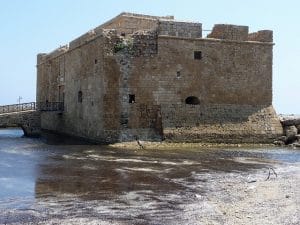
The Larnaca Fort at the southern end of the promenade dates to the Ottoman period (17th century) and houses a small medieval museum with armaments, ceramics and ethnographic exhibits. The view from the fort battlements across the bay is excellent. The Hala Sultan Tekke mosque, set within the salt lake 5 kilometres west of the city, is one of the most important Islamic sites in the eastern Mediterranean and is set in a peaceful garden of cypress trees and palms at the water’s edge — a beautiful and unexpected sight.
The ancient site of Kition, within the modern city boundaries, preserves remains of the Phoenician-era city that existed here from around 1200 BC. The excavations, while less visually spectacular than Kourion or the Paphos mosaics, are significant and the on-site museum explains the remarkable continuity of settlement in this location across 3,000 years of history.
Larnaca Salt Lake is a network of four shallow salt lakes lying just inland from the coast west of the city, covering around 2.5 square kilometres. In summer the lakes dry out completely, leaving a gleaming white crust of salt that was harvested commercially for centuries. From November to March, the lakes fill with winter rainwater and attract one of the most remarkable wildlife spectacles in Cyprus: hundreds and sometimes thousands of flamingos arrive to feed on the brine shrimps that thrive in the shallow saline water.
The sight of a colony of flamingos wading in the pink-tinged water with the dome of the Hala Sultan Tekke mosque visible on the far shore is genuinely extraordinary and completely unexpected given Larnaca’s urban surroundings. A walking and cycling path around the edge of the lake provides excellent viewing access without disturbing the birds. The lake area is also good for other wintering waders and waterfowl, making it a worthwhile stop for birdwatchers visiting in the cooler months.
In summer, when the flamingos have moved on and the lake is dry, the salt flats create an unusual landscape that is still worth visiting for the Hala Sultan Tekke mosque and the walking path around the perimeter. The sunsets over the white salt flats in late summer are memorable.
Larnaca’s central location on the southern Cypriot coast makes it an outstanding base for day trips. Ayia Napa and Protaras are just 35 kilometres east — an easy 40-minute drive for a day at Nissi Beach or Fig Tree Bay. Limassol is 65 kilometres west — 50 minutes on the motorway — giving easy access to Kourion archaeological site, the medieval castle and the lively marina.
The Khirokitia Neolithic settlement — a UNESCO World Heritage Site — is just 30 kilometres west of Larnaca on the Limassol road. One of Europe’s best-preserved prehistoric settlements, occupied from around 7000 BC, it provides a fascinating and uncrowded alternative to the Roman-era sites of Paphos and Kourion. Nicosia, the capital, is 50 kilometres north — under an hour by motorway — for those who want to explore the divided city and its excellent museums.
The Troodos mountains, while further afield (around 70 kilometres), are entirely accessible for a long day trip from Larnaca. The painted Byzantine churches, the Kykkos Monastery, the cool mountain air and the pine forest villages all provide a complete change of scenery from the coastal heat. A combined Troodos and Omodos wine village day trip is one of the most rewarding excursions available on the island.
Larnaca International Airport (LCA) is located just 4 kilometres from the city centre, making Larnaca the most convenient Cypriot resort city to arrive in. Transfer time to most Larnaca hotels is around 10–15 minutes. Year-round direct flights from UK airports including London Heathrow, Gatwick, Manchester, Birmingham, Edinburgh and Bristol are operated by British Airways, easyJet, Jet2, TUI and Wizz Air, with flight times of approximately 4 hours 30 minutes from London.
Car hire desks are located at the arrivals hall and prices are competitive — a hire car is strongly recommended for those wanting to explore beyond the city. The airport bus (Bus 425) connects to the city centre and costs a few euros. Taxis to the Finikoudes promenade cost around 10–15 euros from the airport.
Search4Sun works with leading UK tour operators to find the best value Larnaca holidays. Browse departures from local airports across the UK. For peace of mind when booking, always check your holiday is ABTA protected.
For last-minute deals, check LastMinute.com for the latest availability and rates.
Larnaca is arguably the best base on the island for visitors who want to explore widely. Its central position on the south coast puts Ayia Napa 35 kilometres east, Limassol 65 kilometres west, Paphos 140 kilometres west and Nicosia 50 kilometres north — all accessible as day trips by hire car. The airport’s proximity also removes any transfer stress at the start and end of the holiday.
Visitors using Larnaca as an exploratory base typically spend 2–3 days in the city itself (promenade, St Lazarus church, salt lake) and then use hire car day trips for the remainder of their stay. This approach gives a genuinely diverse Cyprus experience that a single-resort stay cannot match.
Flamingos typically begin arriving at the salt lake from November onwards, once the winter rains have filled the lake with enough water to support feeding. Numbers build through December and January, with the largest flocks present from December to February. The birds begin departing in March as the lake water starts to evaporate.
The best viewing is from the walking path on the western shore near the Hala Sultan Tekke mosque, accessible by car from the main Larnaca–Paphos road. Binoculars are recommended for the best views, and early morning visits allow the birds to be seen against the dramatic light of the rising sun.
The main Finikoudes beach in Larnaca is a long arc of golden sand that is pleasant for a morning swim but does not match the finest beaches at Ayia Napa or Paphos for water clarity or sand quality. The beach is equipped with sunbeds and umbrellas for hire, and the proximity to the promenade restaurants makes it very convenient.
For better beach quality, McKenzie Beach south of the city centre is popular with locals and has good beachfront tavernas. Visitors with hire cars can reach the outstanding beaches of Ayia Napa (35 km) or Protaras (45 km) within 45 minutes for a full beach day.
Cyprus is one of the best European destinations for a winter sun break, and Larnaca is particularly well-suited to out-of-season visits. January and February temperatures average around 17°C — warm enough for outdoor dining and sightseeing but not for swimming. The salt lake flamingos are at their most numerous in these months, making winter a genuinely rewarding time to visit.
March and November offer warmer conditions (20–24°C) with the possibility of swimming on warm days. Larnaca’s year-round flight connections from the UK make it one of the most accessible winter sun destinations in the Mediterranean.
If you book a flight-inclusive Larnaca package through a UK ATOL-licensed tour operator, yes. Your money is protected if the company fails before or during your holiday, and repatriation is covered. Booking independently removes ATOL protection. Our holiday protection guide covers ATOL, ABTA and Section 75 in full.
Search4Sun works with many ATOL-protected UK tour operators — always check the individual operator’s credentials before booking.
Most popular full-day tours


Visa requirements vary significantly by nationality. We recommend contacting your local embassy or immigration office for accurate and up-to-date information.
Check requirements at IATA Travel Centre →| Month | Avg Temp (°C) | Avg Rainfall (mm) |
|---|---|---|
| Jan | 13.1°C | 41.7 mm |
| Feb | 12.2°C | 20.3 mm |
| Mar | 14.7°C | 17 mm |
| Apr | 18.7°C | 19.8 mm |
| May | 22.4°C | 12.2 mm |
| Jun | 26.4°C | 3.9 mm |
| Jul | 29.7°C | 0.4 mm |
| Aug | 29°C | 1.4 mm |
| Sep | 26.5°C | 5.5 mm |
| Oct | 22.9°C | 15.6 mm |
| Nov | 18.8°C | 21.6 mm |
| Dec | 14.6°C | 57.8 mm |
Search4Sun has been comparing UK holiday packages since 2005. We work with some of the best ABTA-registered operators.